Blockchain Development Services
Build secure, scalable blockchain solutions for startups, enterprises, and Web3 businesses.
DigiTechzo provides end-to-end blockchain development services, including smart contracts, dApps, RWA tokenization, blockchain wallets, enterprise blockchain integration, and Web3 solutions.
Reentrancy Protected • Math Overflow Clean • Formal Verification Passed
Enterprise Multi-Chain Ecosystems Supported
Production-tested smart contracts and dApps across leading Layer-1s, Layer-2 rollups, and enterprise ledgers.


Our Blockchain Development Services
Blockchain development covers smart contracts, dApps, blockchain architecture, RWA tokenization, wallets, security, enterprise integration, and ongoing support.
Smart Contract Development
Secure smart contracts for business logic, token operations, payments, escrow, and on-chain transactions.
dApp Development
Build decentralized applications with Web3 interfaces, wallet connectivity, APIs, and blockchain integrations.
Blockchain Architecture & Network Selection
Design and select blockchain networks based on scalability, security, performance, cost, and business requirements.
RWA & Asset Tokenization Development
Build tokenization solutions for real-world assets, securities, loyalty points, and digital assets with on-chain ownership.
Blockchain Wallet Development
Secure custodial, non-custodial, MPC, and multisig wallets for users, businesses, and institutional blockchain applications.
Enterprise Blockchain Integration
Connect blockchain applications with ERP, CRM, banking, payment, and enterprise systems through secure APIs and integrations.
Smart Contract Security Audits
Identify smart contract vulnerabilities through security analysis, testing, verification, and pre-deployment review.
Blockchain DevOps & Support
Monitor blockchain infrastructure, node health, protocol updates, performance, and post-launch issues with ongoing technical support.
WHEN IS BLOCKCHAIN THE RIGHT SOLUTION?
Blockchain is most useful when multiple parties need shared trust, verifiable records, or programmable digital assets.
When Blockchain Is the Right Fit
- Multi-Party Data Sharing: Multiple organizations need a shared, synchronized record without relying on a single central database.
- Verifiable Digital Ownership: Businesses need transparent ownership, asset tracking, or RWA tokenization with on-chain records.
- Automated Smart Contracts: Business rules, payments, escrow, or transactions need automated execution through smart contracts.
- Verifiable Audit Trails: Organizations need tamper-resistant transaction history, provenance, or shared compliance records.
When a Conventional System Is Better
- Single-Organization Data: A centralized database is sufficient when one organization owns and controls the data.
- High-Volume Internal Processing: Standard databases are often more suitable for high-frequency internal queries and transactions.
- Frequently Editable Data: Use conventional systems when records require regular modification, deletion, or centralized administration.
- Centralized Computing Workloads: Conventional cloud infrastructure may be more suitable for compute-heavy applications that do not require shared blockchain state.
DigiTechzo's Blockchain Development Services
We design, develop, secure, and deploy production-ready blockchain solutions through an end-to-end development process.
Blockchain Consulting & Architecture
We define business requirements, select the right blockchain network, and design a scalable architecture for security, privacy, performance, and integration.
- L1 vs L2 Network Selection & Scalability Analysis
- Tokenomics & Economic Model Design
- Zero-Knowledge (ZK) Privacy Architecture
- Blockchain Architecture & System Specifications
- Hardhat, Foundry & Anchor Development Stack
- Upgradeable Smart Contracts: ERC-2535 & UUPS
- Gas Optimization & Efficient Contract Storage
- Role-Based Access Control & Timelock Security
Smart Contract Development
We develop secure smart contracts in Solidity, Rust, and Move for EVM and Solana ecosystems, with business logic, access control, upgradeability, and testing built into the development process.
Smart Contract Security Audits
We test smart contracts for vulnerabilities using static analysis, fuzzing, access-control checks, and pre-deployment security reviews.
- Static Vulnerability & Code Analysis
- Automated Fuzzing & Property Testing
- Oracle & Access-Control Security Testing
- Security Findings & Remediation Guidance
- ERC-20 (Governance & Utility Ecosystem Tokens)
- ERC-721 & ERC-1155 (Dynamic NFTs & Collectibles)
- ERC-3643 / ERC-1400 (Compliant RWA Security Tokens)
- Automated Vesting, Staking Pools & Liquidity Locks
Tokenization & Asset Digitization
Tokenizing real-world assets (real estate shares, invoices, loyalty points, intellectual property) across ERC-20, ERC-721, and ERC-1155 standards with built-in compliance controls, whitelisting, and transfer restrictions.
Wallet & Custody Solutions
Multi-currency and single-chain key management tailored to your risk profile — from non-custodial MPC wallets with biometric social login to institutional multi-sig vaults with Hardware Security Module (HSM) support.
- Multi-Party Computation (MPC) Key Sharding
- Account Abstraction (ERC-4337) with Social Login Recovery
- Gnosis Safe Multi-Sig Smart Vault Integration
- Hardware Security Module (HSM) Cloud Custody Setup
- Wagmi, Viem, Ethers.js & Web3.js Interactivity
- Gasless Meta-Transactions (EIP-2771 / Biconomy Relayers)
- The Graph Custom Subgraphs & Real-Time Indexing
- Responsive DeFi Staking & Permissioned Admin Dashboards
Decentralized Applications (dApps)
Building intuitive user-facing Web3 applications — DeFi protocols, NFT marketplaces, staking platforms, and permissioned admin consoles — with streamlined wallet onboarding and gasless meta-transactions.
Blockchain Integration Services
Connecting on-chain smart contracts to existing enterprise stacks (SAP, Salesforce, banking rails) using Chainlink oracles, decentralized indexing subgraphs, and secure RESTful Web3 microservices.
- Chainlink Data Feeds, CCIP Cross-Chain & VRF Oracles
- Bidirectional Middleware for SAP, Salesforce & Oracle ERP
- Secure RESTful Web3 Microservices & Event Webhooks
- ISO 20022 Banking Protocol & Swift Interoperability
- 99.99% Dedicated RPC Node Uptime & Low-Latency Routing
- Real-Time Prometheus & Grafana Web3 Alert Pipelines
- Ongoing Smart Contract Upgrades & Gas Optimization
- 24/7 Priority SLA Incident Response & Bug Bounties
Post-Launch DevOps & 24/7 SLA
Ongoing RPC node health monitoring, smart contract upgrades, gas optimization, and dedicated 24/7 SLA incident response so shipped blockchain infrastructure stays secure, resilient, and performant.
High-Impact Engineering Across the Stack
Take a look at how we package security, intuitive user interface design, enterprise integration, and tokenization into turnkey products.
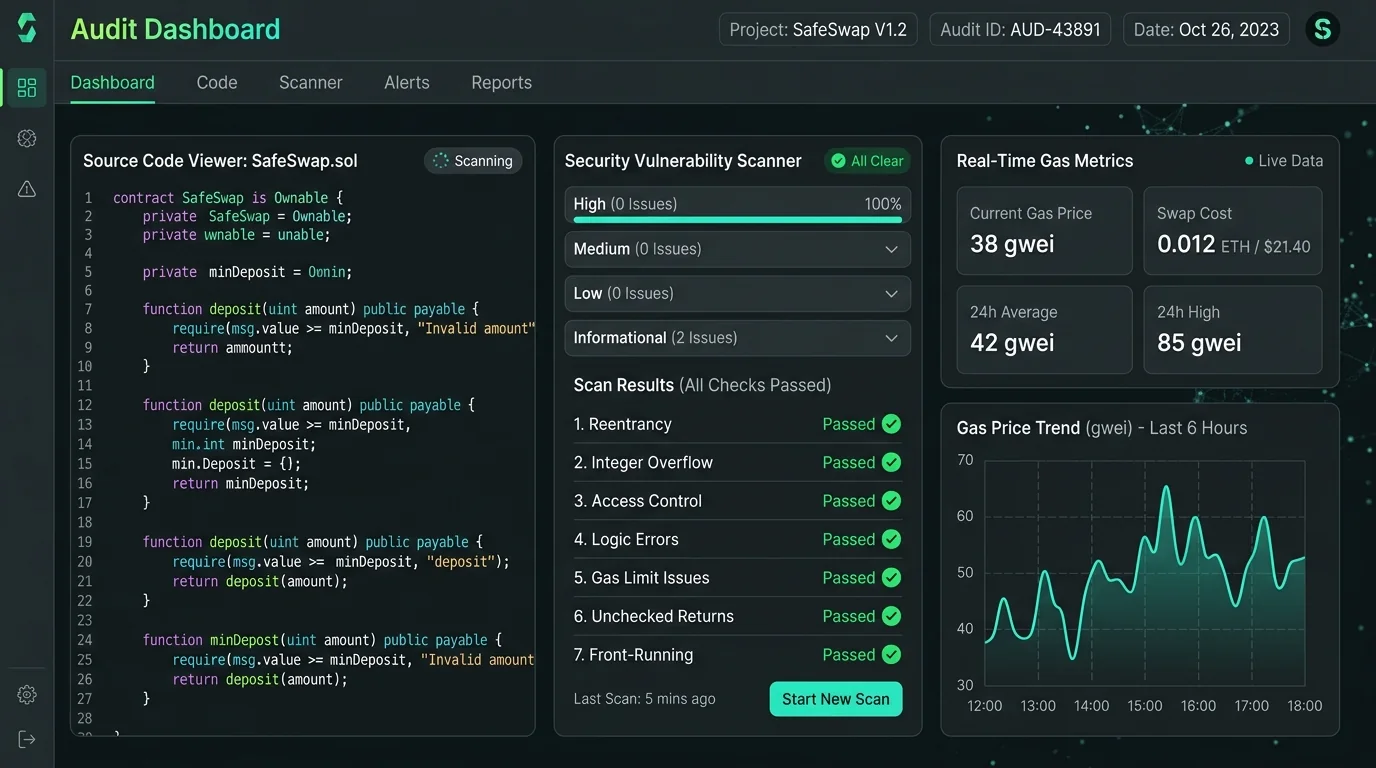
Audited & Defensive Smart Contracts
Our smart contract security services combine automated testing and expert analysis to identify vulnerabilities, improve reliability, and support secure blockchain deployments.
- Smart contract development and security auditing
- Vulnerability detection, testing, and static analysis
- Gas optimization and detailed security audit reports
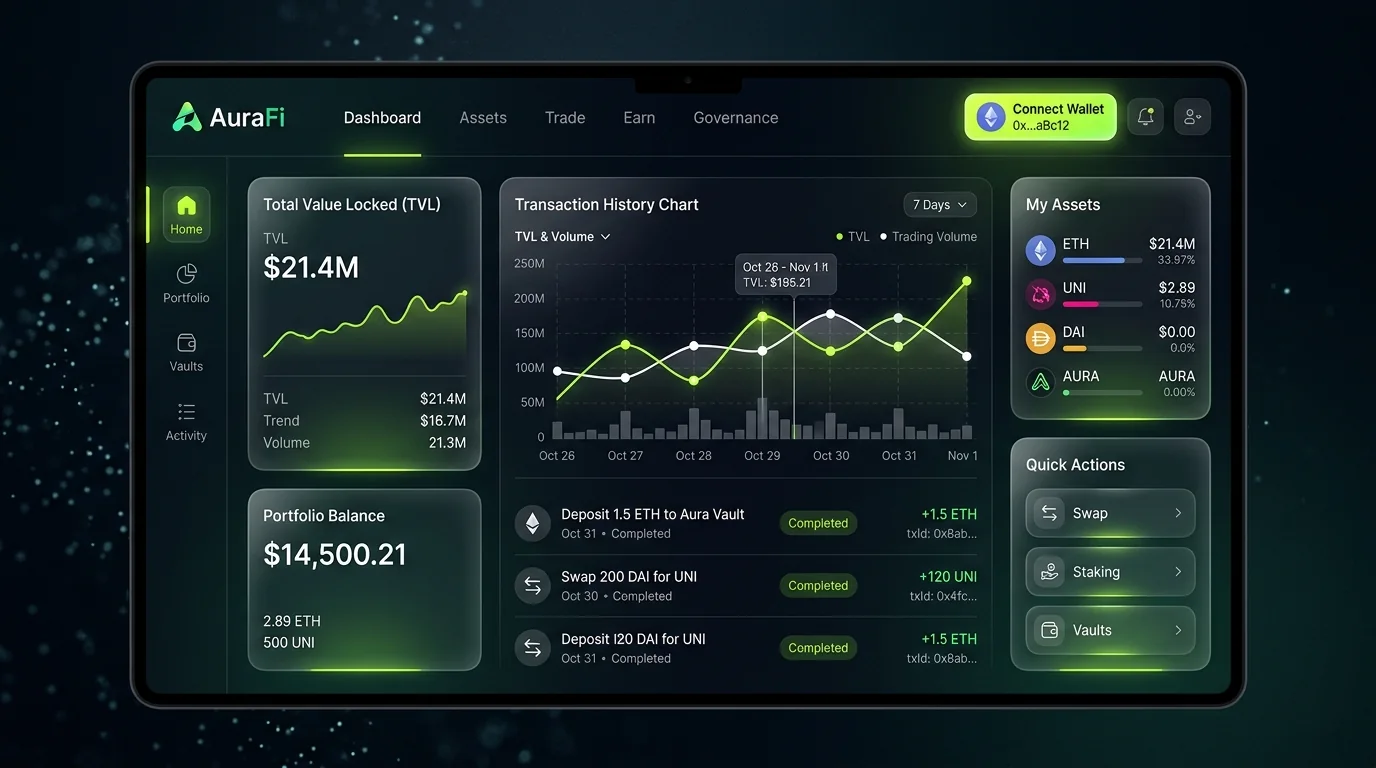
Seamless Web3 UX & dApp Development
Create fast, secure, and user-friendly Web3 applications with DigiTechzo. We simplify blockchain user experiences through wallet integration, account abstraction, social login, gasless transactions, and responsive dApp interfaces for users across devices.
- Secure non-custodial wallets, account abstraction, and multi-wallet integration
- MetaMask, WalletConnect, Coinbase Wallet, and Web3 authentication integration
- Real-time blockchain event updates for responsive dApp experiences
Enterprise System & ERP Integration
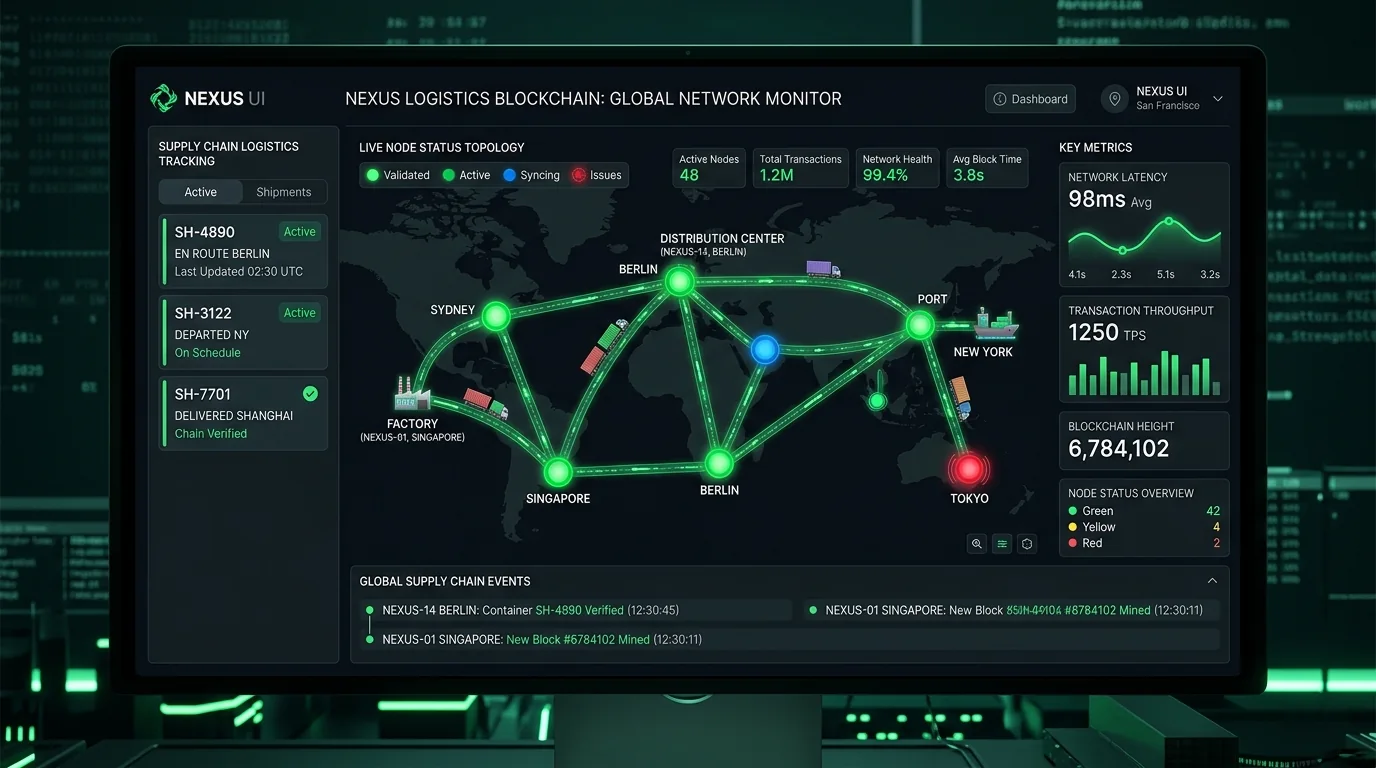
Connect your existing ERP, supply chain, and financial systems with secure blockchain networks through scalable blockchain integration solutions from DigiTechzo. We integrate enterprise applications with permissioned and public blockchains using secure APIs, middleware, and on-chain verification while minimizing disruption to your business operations.
- ERP, supply chain, and financial system blockchain integration
- Secure off-chain data storage with on-chain verification
- High-performance blockchain middleware and API integration
- Scalable, secure, and enterprise-ready blockchain architecture
Real-World Asset Tokenization & Digital Asset Solutions
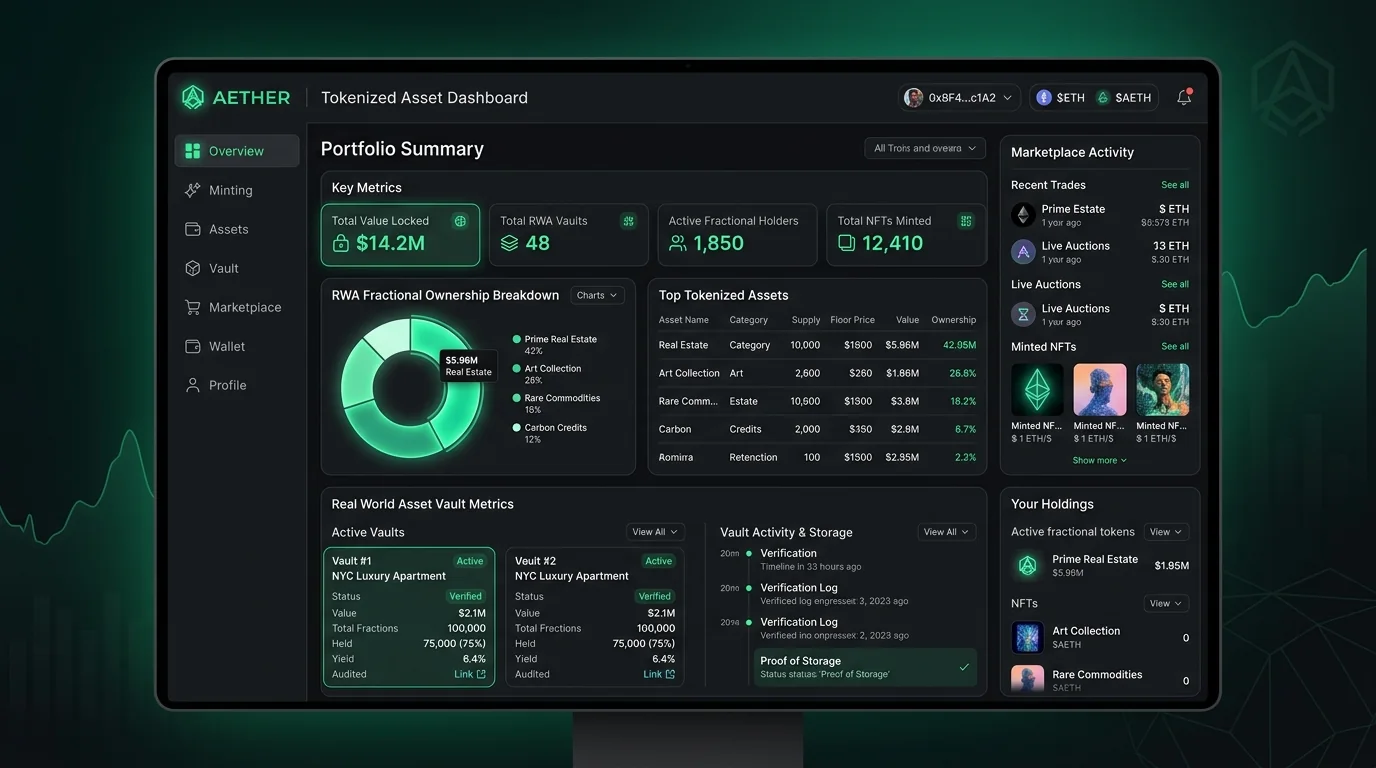
Transform real-world assets into secure, compliant digital assets with DigiTechzo. We develop tokenization platforms for real-world assets (RWA), utility tokens, NFTs, and digital asset ecosystems, with flexible token management, secure transfers, and marketplace-ready infrastructure.
- Secure token creation, minting, and transfer management
- RWA tokenization and digital asset marketplace integration
- Automated fee, royalty, and secondary-market distribution
- Custom admin dashboards for token and asset management
BLOCKCHAIN SOLUTIONS FOR INDUSTRIES & BUSINESS USE CASES
DigiTechzo delivers blockchain development and Web3 solutions for businesses across India, the USA, and the UAE, helping organizations improve payments, asset tokenization, supply chains, healthcare, gaming, and customer loyalty.
Fintech & payments
Blockchain solutions for secure digital payments, stablecoin integration, cross-border transactions, and automated settlement workflows.
Real Estate & Property Tokenization
Tokenize real-world property assets and enable fractional ownership, digital asset management, and blockchain-based real estate platforms.
Supply chain & logistics
Improve supply chain transparency with blockchain-based tracking, tamper-resistant records, product traceability, and secure data sharing.
Healthcare & Data Management
Enable secure healthcare data sharing, patient-consented access, data traceability, and interoperable blockchain solutions for healthcare organizations.
Gaming & Digital Assets
Build blockchain gaming ecosystems with NFT integration, digital asset ownership, tokenized in-game assets, and Web3 marketplace functionality.
Loyalty & rewards programs
Create blockchain-powered loyalty programs with tokenized rewards, digital assets, transferable points, and transparent reward management.
Web3-Native Products, dApps & Blockchain Platforms
We build Web3 products including DeFi platforms, decentralized exchanges (DEXs), DAOs, NFT marketplaces, and custom dApps. DigiTechzo designs secure and scalable blockchain architectures based on your product requirements, business model, and on-chain use case.
Common Blockchain Development Challenges — and How They're Handled
Most blockchain projects run into the same handful of problems. How a development partner handles them says more about their competence than any marketing claim does.
Our Blockchain Development Process
A structured 6-step blockchain development process covering discovery, architecture, smart contract development, security testing, deployment, and post-launch support.
1. Discovery & Blockchain Feasibility
We analyze your business requirements, use case, technical needs, budget, and timeline to determine the right blockchain network and development approach for your project.
2. Blockchain Architecture & Specification
We define the blockchain architecture, smart contract logic, tokenomics, APIs, data flow, wallet requirements, and security specifications before development begins.
3. Smart Contract & dApp Development
Our developers build and integrate smart contracts, decentralized applications (dApps), APIs, and Web3 features through structured development sprints and testing milestones.
4. Blockchain Testing & Security Audit
We test smart contracts and blockchain applications using automated security analysis, vulnerability testing, and audit processes to identify issues before production deployment.
5. Mainnet Deployment & Integration
We deploy the blockchain solution to mainnet with secure configuration, monitoring, key management, API integration, and deployment safeguards.
6. Post-Launch Blockchain Support
We provide ongoing blockchain maintenance, network monitoring, smart contract support, node management, performance optimization, and technical assistance after launch.
BLOCKCHAIN DEVELOPMENT TECHNOLOGIES & TECH STACK
DigiTechzo selects blockchain networks, smart contract languages, token standards, and Web3 infrastructure based on your project requirements, scalability, security, and integration needs.
Public Blockchains
Ethereum, Polygon, BNB Chain, Solana, and other EVM and non-EVM networks selected based on scalability, transaction costs, security, and ecosystem requirements.
Permissioned / Enterprise Ledgers
Hyperledger Fabric, Corda, Quorum, and other enterprise blockchain platforms for permissioned networks, data privacy, secure transactions, and business workflows.
Smart Contract Languages
Solidity and Vyper for EVM-compatible networks, with Rust for Solana and other high-performance blockchain applications.
Token Standards
ERC-20, ERC-721, ERC-1155, and chain-specific token standards for utility tokens, NFTs, digital assets, and real-world asset tokenization.
Supporting Infrastructure & Middleware
IPFS and decentralized storage, Chainlink oracles, blockchain APIs, Web3 SDKs, and webhook infrastructure for connecting decentralized applications with external data and enterprise systems.
We select the blockchain network, programming language, and infrastructure based on your project's business requirements, security needs, scalability, transaction costs, compliance considerations, and integration requirements. This approach helps us build the right blockchain architecture instead of applying a fixed technology stack to every project.
What Drives the Cost of a Blockchain Project
Cost transparency is where most blockchain development pages go quiet. The real cost drivers are:
HOW TO CHOOSE A BLOCKCHAIN DEVELOPMENT COMPANY
Compare blockchain development companies by evaluating their technical expertise, blockchain architecture, smart contract security, development process, and post-launch support before starting your project.
Blockchain Architecture & Network Selection
“Which blockchain network is best suited to our business use case, and why?”
A reliable blockchain development partner should explain the differences between Ethereum, Polygon, BNB Chain, Solana, and enterprise blockchain networks based on scalability, transaction costs, security, performance, and business requirements.
Blockchain Feasibility & Technical Strategy
“Is blockchain the right technology for our business requirement?”
A trustworthy development company should evaluate your use case objectively and explain when blockchain is appropriate, when a traditional database may be more practical, and which architecture best fits your project.
Smart Contract Security & Auditing
“How do you test and secure smart contracts before deployment?”
Look for structured smart contract testing, static analysis, vulnerability detection, automated security testing, and independent audit processes before deploying contracts to mainnet.
Blockchain Development Process & Milestones
“Will we receive clear milestones and working product updates during development?”
A professional blockchain development company should provide defined development milestones, regular progress updates, testable smart contracts, dApp previews, and transparent communication throughout the project.
Post-Launch Blockchain Support
“What blockchain maintenance and support do you provide after launch?”
Check whether the development partner provides ongoing blockchain maintenance, application updates, performance monitoring, node support, security improvements, and technical assistance after deployment.
Web3 Integration & Go-To-Market Support
“Can you help integrate our blockchain product with the Web3 ecosystem and business systems?”
Look for support with wallet integration, Web3 APIs, dApp integration, blockchain analytics, third-party integrations, and technical optimization needed to launch and scale the product.
DigiTechzo conducts unvarnished technical due diligence on third-party smart contract specifications, protocol designs, and tokenization roadmaps before you commit budget.
WHY CHOOSE DIGITECHZO FOR BLOCKCHAIN DEVELOPMENT
We bridge engineering excellence with go-to-market discovery so your product gets built right and gets found.
Engineering-First Blockchain Development
DigiTechzo approaches blockchain development with a structured engineering process. We start with your business requirements, evaluate whether blockchain is the right solution, select the appropriate technology stack, and define clear development milestones. Security testing and post-launch support are built into the development process.
Development happens in reviewable milestones with security review built into the process rather than added at the end, and post-launch support is a defined part of the engagement rather than an afterthought.
Blockchain Development + SEO & GEO Strategy
Beyond blockchain development, DigiTechzo helps businesses build online visibility for their Web3 products. Our team combines SEO, content strategy, and Generative Engine Optimization (GEO) to improve how blockchain products are discovered across search engines and AI-powered answer platforms.
A well-built product with no visibility strategy behind it is a common and avoidable failure mode in blockchain launches; DigiTechzo is structured to prevent that gap.
Frequently Asked Questions About Blockchain Development
Clear answers to the most common questions about blockchain architecture, timelines, and deployment.
The timeline depends on the project's scope, blockchain network, smart contract complexity, integrations, and security requirements. A simple blockchain application may take a few weeks, while a complex dApp, tokenization platform, or enterprise blockchain solution can require several months. DigiTechzo defines the development timeline after evaluating the project requirements.
No. Most blockchain projects can be developed on an existing network such as Ethereum, Polygon, BNB Chain, or Solana. DigiTechzo evaluates your use case, scalability, transaction costs, security, and business requirements to recommend the appropriate blockchain architecture.
Blockchain development costs vary based on the project's features, smart contracts, blockchain network, integrations, security requirements, and development scope. DigiTechzo provides project-specific estimates after understanding the technical and business requirements rather than applying a fixed price to every blockchain project.
DigiTechzo incorporates smart contract security testing throughout the development process. This can include code review, static analysis, automated vulnerability testing, testnet deployment, and security audits to identify potential issues before mainnet deployment.
Yes. Blockchain solutions can be integrated with existing ERP, CRM, payment, supply chain, database, and other enterprise systems through APIs, middleware, Web3 integrations, and secure data verification. The integration approach depends on the existing system architecture and project requirements.
There is no single blockchain network that is best for every project. DigiTechzo evaluates factors such as transaction speed, scalability, network fees, security, ecosystem support, smart contract capabilities, and integration requirements before recommending a blockchain network.
Yes. DigiTechzo develops Web3 applications and decentralized applications (dApps) with features such as smart contracts, wallet integration, Web3 authentication, tokenization, NFT functionality, blockchain APIs, and decentralized data infrastructure.
Yes. Post-launch support can include blockchain application maintenance, smart contract support, performance monitoring, node and infrastructure management, security updates, troubleshooting, and feature enhancements based on the project's support requirements.
No. A blockchain application does not necessarily require its own cryptocurrency or token. Tokenization is only needed when the business model or product requires digital assets, utility tokens, NFTs, rewards, governance, or real-world asset tokenization.
Yes. DigiTechzo provides blockchain development and Web3 technology services for startups and businesses across India, the USA, and the UAE, covering blockchain architecture, smart contract development, dApp development, tokenization, blockchain integration, security testing, and post-launch support.
Start Your Blockchain Development Project
Have a blockchain idea, Web3 product, or business use case? DigiTechzo helps startups and businesses across India, the USA, and the UAE plan, develop, secure, and launch scalable blockchain solutions. Our team can evaluate your requirements, recommend the right blockchain architecture, and define a practical development roadmap for your project.
Start with a discovery conversation covering your business goals, existing technology, required features, timeline, and budget. We’ll help you understand the suitable blockchain network, development approach, security requirements, and realistic project scope before development begins.