You're managing 40 units across three properties. Rent collection is scattered across bank transfers, cash, and the occasional check someone mails "just to be safe." Maintenance requests come in as texts, calls, and sticky notes. Your spreadsheet has more errors than a first draft. Sound familiar?
This is the exact moment most real estate companies start searching for the top property management software — not because it's trendy, but because manual processes stop scaling somewhere between 15 and 50 units. At Digitechzo, we've spent years helping property management companies and real estate teams evaluate, implement, and get real ROI from software platforms, and the same question comes up every time: "Which one actually fits my portfolio?"
This guide answers that question in detail — no fluff, no vague "it depends" answers without substance.
The top property management software for most real estate companies in 2026 combines four things: automated rent collection, integrated maintenance tracking, accounting/reporting, and tenant screening — all in one platform. For small portfolios (under 50 units), Buildium and TurboTenant offer the best value. Mid-size and enterprise real estate companies typically need AppFolio, Yardi, or Propertyware for scalability, advanced accounting, and multi-entity management.
What Is Property Management Software, and Why It Matters
Property management software is a centralized platform that automates the day-to-day operations of managing rental properties — rent collection, lease tracking, maintenance coordination, tenant communication, and financial reporting. Instead of juggling five different tools (or none at all), a real estate company runs everything through one system.
Here's the practical reality: a mid-sized property management firm handling 200 units manually spends, on average, 15–20 hours per week on tasks that software can automate to under 3 hours. That's not a marketing number — it's the kind of time recovery we consistently see when real estate companies migrate off spreadsheets and onto a dedicated platform.
The top property management software platforms solve three core problems:
- Operational chaos — scattered rent payments, missed maintenance tickets, disorganized lease documents
- Cash flow visibility — late payments, inconsistent accounting, delayed owner reporting
- Tenant experience — slow communication, manual screening, no self-service portal
If any of these sound like your current pain points, you're already past the point where manual management makes sense.
Core Features of the Top Property Management Software
Not all platforms are built equally, and feature lists can be misleading. Here's what actually matters when evaluating the top property management software for a real estate company.
Rent Collection and Online Payments
The best platforms support ACH transfers, credit/debit cards, and recurring auto-pay. Look for same-day or next-day deposit options — some platforms hold funds for 3–5 business days, which quietly hurts your cash flow.
Maintenance and Work Order Management
A tenant submits a request through the portal, it auto-routes to your maintenance team or a third-party vendor, and status updates happen without a single phone call. This single feature alone eliminates the most common tenant complaint: "nobody responded."
Accounting and Financial Reporting
Real estate companies need trust accounting, not just basic bookkeeping. The top property management software platforms offer built-in general ledgers, owner statements, 1099 generation, and bank reconciliation — critical for firms managing properties on behalf of owners.
Tenant Screening and Leasing
Credit checks, background checks, eviction history, and income verification should happen inside the platform, not through a separate third-party tool you're manually cross-referencing.
Communication and Tenant Portals
A self-service portal reduces incoming calls dramatically. Tenants pay rent, submit requests, and view lease documents without contacting your office.
Scalability and Integrations
This is where many companies get it wrong. A platform that works for 20 units might completely break down at 200. Check for API access, accounting software integrations (QuickBooks, Xero), and multi-property/multi-entity support before committing.
Comparison: Top Property Management Software Options for 2026
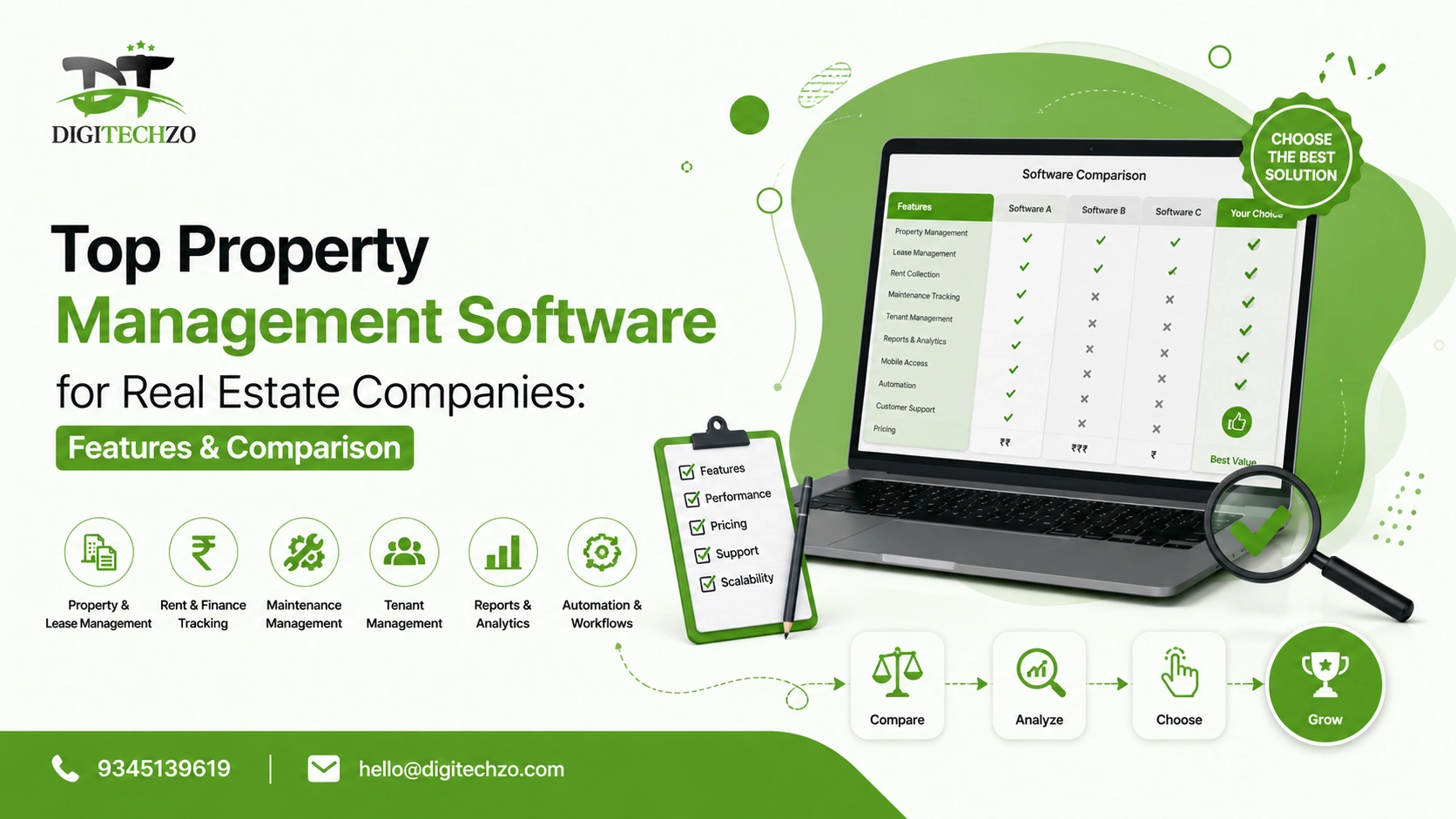
Here's a direct comparison of platforms that consistently rank among the top property management software choices for real estate companies of different sizes.
| Software | Best For | Starting Price | Standout Feature | Limitation |
|---|---|---|---|---|
| AppFolio | Mid-size to large portfolios (50+ units) | ~$1.49/unit/month | AI-powered leasing assistant, strong reporting | Steeper learning curve, higher onboarding cost |
| Buildium | Small to mid-size firms | ~$58/month (up to 20 units) | Excellent accounting tools, easy setup | Limited customization at scale |
| Yardi Breeze | Enterprise & commercial real estate | Custom pricing | Deep commercial + residential support | Expensive for small portfolios |
| TurboTenant | Independent landlords, small companies | Free (paid add-ons) | Free core features, simple screening | Fewer advanced accounting tools |
| Propertyware | Single-family portfolio managers | ~$1–2/unit/month | Highly customizable workflows | Interface feels dated compared to competitors |
| Rentec Direct | Small-to-mid landlords | ~$50/month | Strong accounting + tenant screening bundle | Smaller integration ecosystem |
Featured snippet answer: The top property management software for most real estate companies depends on portfolio size — AppFolio and Yardi lead for scale, while Buildium and TurboTenant lead for affordability and simplicity.
Pros and Cons by Company Size
Small Real Estate Companies (Under 50 Units)
Pros:
- Lower monthly cost, often under $100/month
- Faster onboarding (days, not weeks)
- Simple enough that non-technical staff can manage it
Cons:
- Fewer advanced reporting tools
- Limited multi-entity or franchise support
Mid-Size to Enterprise Real Estate Companies (50+ Units)
Pros:
- Advanced trust accounting and owner portals
- Scales across multiple properties, entities, and teams
- Deeper integrations with CRM, accounting, and marketing tools
Cons:
- Higher setup and per-unit costs
- Requires dedicated staff time for implementation and training
How to Choose the Right Property Management Software
Choosing among the top property management software platforms isn't about picking the "best" one in the abstract — it's about matching the platform to your operational reality. Here's the framework we use when advising real estate companies:
- Map your current workflow first. List every manual task — rent collection, maintenance dispatch, lease renewals — before evaluating software. You can't fix what you haven't mapped.
- Calculate your true unit-based budget. Multiply the per-unit cost by your portfolio size and factor in growth over the next 2 years, not just today.
- Test the tenant portal experience yourself. Sign up for a demo account and go through the tenant flow. If it's confusing to you, it will frustrate your tenants too.
- Check accounting depth, not just presence. "Has accounting" and "has trust accounting with owner disbursement automation" are two very different things.
- Confirm support responsiveness before signing. Contact their support team with a real question during your trial. Response time here predicts your future experience.
Common Mistakes When Selecting Property Management Software
Even experienced real estate operators make these errors when evaluating the top property management software options:
- Choosing based on price alone. The cheapest platform often lacks the accounting depth needed for owner reporting, leading to costly manual workarounds later.
- Ignoring the migration process. Moving historical lease and financial data is harder than most vendors admit. Ask specifically how data migration works before signing.
- Skipping the trial period. A polished sales demo is not the same as daily usage. Always run a live trial with real (or realistic) data.
- Underestimating training time. Teams that skip proper onboarding often revert to spreadsheets within 90 days, wasting the software investment entirely.
- Overlooking mobile functionality. Property managers and maintenance staff work in the field. If the mobile app is weak, adoption suffers immediately.
- Not verifying integration compatibility. If you already use QuickBooks or a specific CRM, confirm native integration exists — don't assume it does.
Expert Tips to Maximize Your Software ROI
- Start with one property before full rollout. Pilot the software on your smallest or simplest property first to catch workflow issues early.
- Automate late fees and reminders immediately. This single automation typically reduces late payments by a noticeable margin within the first two billing cycles.
- Use the reporting dashboard weekly, not monthly. Real estate companies that review financial dashboards weekly catch cash flow issues before they compound.
- Train tenants on the portal at move-in. Adoption rates jump significantly when tenants are walked through the portal during onboarding rather than left to figure it out.
- Revisit your software choice annually. Portfolio size and needs change — the top property management software for a 30-unit company two years ago may not fit a 150-unit company today.
Frequently Asked Questions
What is the top property management software for small landlords?
For landlords managing under 20 units, TurboTenant and Buildium are generally the top property management software choices because of their low cost, free screening tools, and simple setup process.
How much does top property management software typically cost?
Most top property management software platforms charge between $1 and $2 per unit per month, or a flat monthly fee ranging from $50 to $200 for smaller portfolios. Enterprise platforms like Yardi use custom pricing based on portfolio complexity.
Can property management software handle both residential and commercial properties?
Yes. Platforms like Yardi and AppFolio support mixed residential and commercial portfolios, while Buildium and TurboTenant focus primarily on residential properties.
Is it worth switching software if I already use spreadsheets?
Yes, in almost every case. Real estate companies managing more than 10–15 units typically see measurable time and cost savings within the first 3–6 months after switching to dedicated software.
What integrations should I look for in property management software?
Prioritize accounting integrations (QuickBooks, Xero), payment processors, tenant screening services, and — if you run marketing campaigns — CRM or listing syndication tools.
Why Choose Digitechzo for Property Management Software Selection and Implementation?
Selecting property management software isn’t just about comparing features — it’s about choosing a system that fits how your real estate business actually operates. The wrong decision can lead to fragmented workflows, missed revenue opportunities, and ongoing operational friction that limits growth.
Digitechzo approaches this as a technology and workflow problem, not just a software recommendation. As an AI Development Company, the team helps real estate businesses evaluate platforms based on real usage scenarios, then extends those systems with automation, integrations, and customizations where standard tools fall short. This ensures your software stack aligns with your portfolio size, team structure, and long-term growth plans.
The result is a more connected operation — where leads are tracked consistently, tenant communication is streamlined, financial data is accurate, and repetitive tasks are reduced through automation. Instead of juggling disconnected tools, your team works within a system designed for clarity and efficiency.
Digitechzo acts as a practical partner in this process, helping you move from comparison to confident implementation without costly missteps.